SILENT HILL Townfall Narrative Puzzles in Townfall
Signals, scales, and 1996 machines — how St. Amelia talks instead of locking a door.
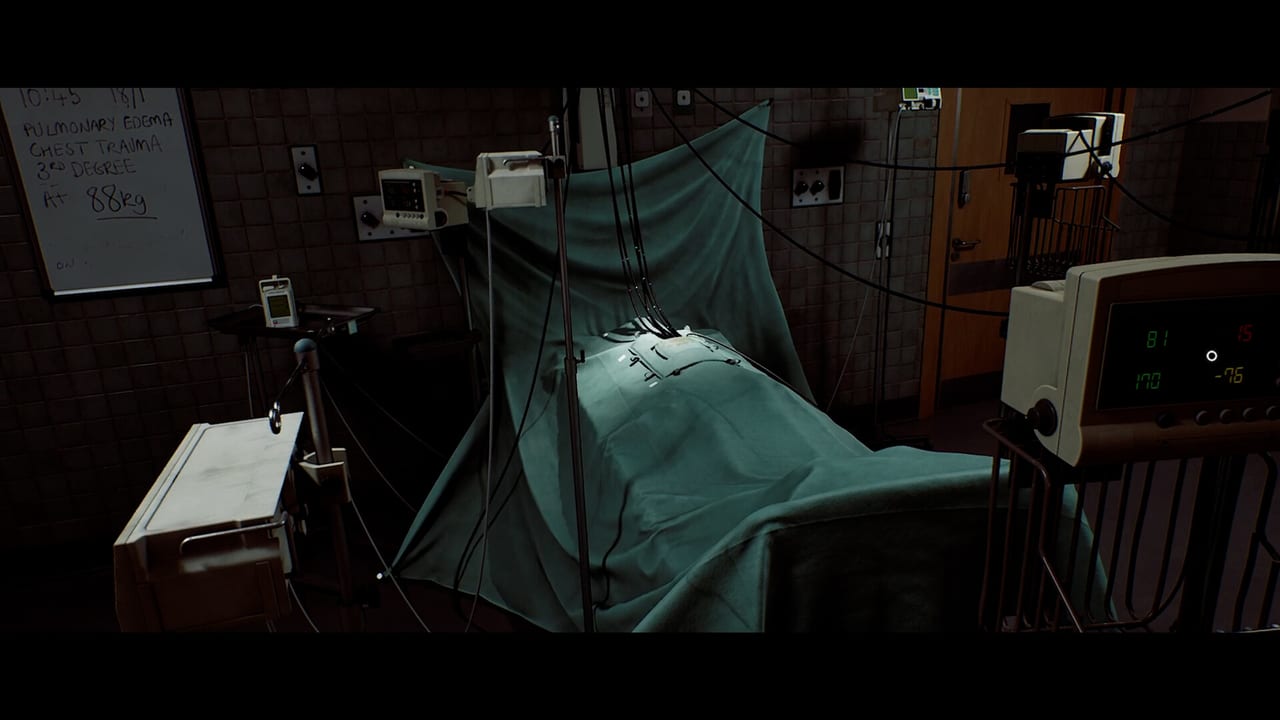
Jon McKellan has been unusually direct about Townfall’s puzzles: they are also the story. You are not hunting a coloured keycard so a corridor will load. You are assembling who Zoe was, what St. Amelia did to its nurses, and why Simon was told to come home. SILENT HILL: Townfall is still unreleased — September 24, 2026 — so this page explains the logic of the rooms already shown, not a spoiler chart of every combination.
Screen Burn’s previous games, Stories Untold and Observation, were about sitting with old machines until they confessed. Townfall keeps that habit and drops it into a Silent Hill town. The CRTV is the notebook. Radios, prepaid electricity, elevators that should not connect, and a clinic of failed instruments are the sentences. If you treat them as optional side content, you will understand the street and miss the person.
Story first, padlock never
Classic series puzzles sometimes asked you to weigh a hanging man or recite a verse you found in a toilet. McKellan has said Townfall prefers grounded 1990s technology: fuse panels, electricity cards, broadcast monitors, dial-up era clutter. The fear is that a real Scottish harbour town still runs on those objects, not that a demon invented a new lock.
That does not make the puzzles easy. It makes the answers biographical. PlayStation Blog’s hands-on walked a cluster around Zoe that is the template:
- Her empty apartment says she is a nurse. The ID badge is not loot; it is a name you can take to a workplace.
- A nearby pharmacy holds a prescription she called in at the wrong dosage. The “combination” is the mistake.
- A coworker’s apartment holds her medical bag and a broken stethoscope — the symbol, McKellan said, of not being able to hear patients.
- Her clinic office has three scales, each waiting for an object that mattered to her and that she treated as a failure. Place the failures. The room answers.
You can brute-force a scale if you dump every inventory item onto it. You will not know why the door opened. Townfall’s endings later read how thoroughly you investigated; rushing a puzzle is not free. The endings overview stays spoiler-light, but the needle that “moves” includes time spent in rooms like these.
The CRTV is the hint system you can see
Tuning is how the game talks without a quest compass. A loop of images on the glass is often the object, the building, or the next street. Lock the signal so you can flip back to it. Then walk until architecture matches the clip. Game Informer watched Simon follow static to a house the way you would follow a radio beacon; that is the intended use, not a glitch.
Radios around St. Amelia exist so you can calibrate the CRTV against them. DualSense gyro twists for a weak signal; L1 and R1 slide RGB channels into alignment. It is a short analog minigame. Fail it and you try again — the story does not punish a missed channel the way a missed block does. Full hardware notes are on controls and the CRTV guide.
When you are stuck, look at the glass before you look at a walkthrough. The set is already showing Zoe’s past and the town’s past on the same snow. If a clip feels like flavour, watch it twice. The second loop is usually the detail you skipped: a dosage, a door, a card in a fuse board.
The elevator that returns you to the street
The opening stretch, covered without ending spoilers on the Shorefront walkthrough, sends Simon from the docks into a red-lit underground structure — Otherworld architecture — and then, impossibly, into an apartment. The CRTV is there. You need it to operate an elevator that dumps you back onto St. Amelia’s streets as if the geometry had been a dream you can still ride.
Treat that elevator as the mission statement. Rooms in Townfall do not stay in one world. A lift, a door, a phone call can re-thread the town. If a space “should not connect,” you are not lost; you are being told the island does not respect the map in your hands. Flip the paper map anyway. The legend on the back is still true for the fog world. The Otherworld will lie.
Hint toggle, not a second campaign
Preview difficulty splits combat and puzzles. Story, Normal, and Nightmare change how brittle Simon is. Puzzle hints are a separate on/off (or hints versus normal) toggle. Press defaulted to Normal combat with hints on. Turn hints off if you want the Screen Burn version of sitting with a machine. Leave them on if you would rather not stall a horror game on a fuse box.
Hints do not appear to rewrite the story objects. They point. They do not place the stethoscope for you. If you came from Silent Hill f’s puzzle difficulties, do not expect a “Lost in the Fog” riddle language here; the team has been explicit about preferring readable 1996 tech over occult poetry.
How to work a Townfall room
- Enter and listen. Interactables mark when you are close; they will not glitter across a kitchen.
- Raise the CRTV. Lock anything that looks like a person, a building, or a number.
- Search drawers, bags, and clinic trays for objects that belong to someone, not for “puzzle items” as a category.
- Carry those objects to the room that is about that person — Zoe’s office, a pharmacy counter, a fuse board that wants a Scottish electricity card.
- If a radio is present, calibrate. If an elevator is present, assume it is a sentence, not a fast-travel toy.
A first clear is estimated at 10 to 14 hours. Puzzle-heavy, thorough players sit on the long end. That extra time is not padding; it is the investigation the endings later quote. Read Zoe so the scales mean something, then go back to the walkthrough when you need the Shorefront order rather than the logic. Townfall does not hide a poem in a padlock. It hides a nurse in a frequency.
Frequently Asked Questions
Quick answers for launch week and first-person survival.
Are Townfall puzzles like classic Silent Hill riddles?
Only in spirit. McKellan has aimed at grounded 1996 machines — radios, electricity cards, clinic tools — rather than occult padlocks. The answers are about Zoe and the town.
How does the CRTV help with puzzles?
Signals loop images that point to objects, rooms, and people. Radios let you calibrate RGB channels. Start on the CRTV guide if tuning still feels like a menu.
What is the elevator in the opening?
After the red-lit structure and the apartment where you find the CRTV, an elevator returns Simon to St. Amelia’s streets. Geometry is part of the story. Room order is on the walkthrough.
Can I turn puzzle hints off?
Yes. Preview builds split combat difficulty (Story, Normal, Nightmare) from a puzzle-hint toggle. Hints on was the press default.
Do puzzles affect endings?
Endings come from aggregate behaviour, not a last A/B pick. How thoroughly you investigate rooms is one of the needles. See Zoe and the endings page.